
Species guide · New Jersey
Black sea bass in New Jersey
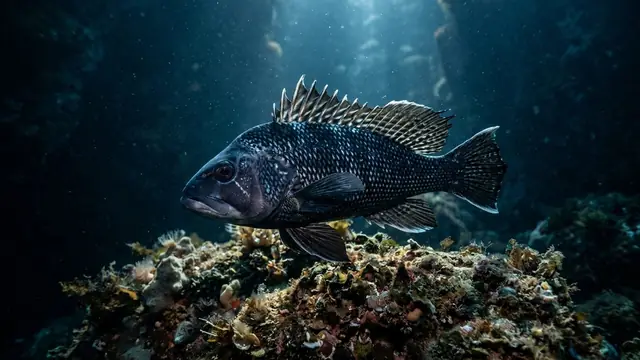
Black sea bass live on structure, so in New Jersey you catch them on wrecks, artificial reefs and rock piles. Fishing is good from late spring through summer on inshore structure, and the biggest fish usually come in the fall and early winter on deeper wrecks as they move offshore.
Quick facts
- Also called
- Sea bass, knothead (big males)
- Peak
- Late spring; October to December
- Water
- 20 ft rock piles to deep offshore wrecks
- Where
- Wrecks, reefs, rock and rubble
Black sea bass by month
- January: Some
- February: Some
- March: Some
- April: Some
- May: Good
- June: Peak
- July: Good
- August: Good
- September: Good
- October: Peak
- November: Peak
- December: Good
A general guide for the Jersey coast, not a forecast. Open seasons are set separately.
When is the best time to catch black sea bass in New Jersey?
Sea bass move inshore onto coastal wrecks and reefs in late spring and spread out over structure all summer. In the fall they gather and head for deeper water, and that's when big fish stack up on the offshore wrecks.
New Jersey often splits the open season into several periods across the year. The dates change annually, so check them before you plan a trip.
Where do you find black sea bass?
Anywhere there's hard bottom: shipwrecks, the state's artificial reef sites, rock piles and rubble. Inshore reefs a few miles off the beach hold plenty of smaller fish in summer. The larger fish favour deeper wrecks, and in late fall the best structure can be 20 miles or more offshore.
Fish the up-current side of a wreck so the bait drifts into it, and move if the bite is all small fish: the bigger ones are often on a different piece of the same structure.
How do you catch black sea bass?
Sea bass bite readily, so the craft is in finding keepers. Bigger baits and jigs help weed out the small ones.
- A two-hook high-low rig with strips of squid or clam, just heavy enough to hold bottom.
- Diamond jigs, butterfly jigs and bucktails worked right on the structure; jigs often pick the bigger fish.
- Anchoring up-current of a wreck in a stiff tide; drifting the structure on slower days.
How does weather affect sea bass fishing?
Sea bass are less moody than most fish once you're on the right structure. The limits are the ride and the drift: a hard drift in wind against tide makes it hard to hold a bait on a wreck, and the deep fall spots mean a longer run in shorter days. Check the swell and wind window for the whole day, not just the morning.
What are the black sea bass regulations in New Jersey?
Seasons, size limits and bag limits for black sea bass are set every year and can change mid-season, so Inlet does not print them here. Check the current rules with NJ Fish & Wildlife before every trip, and with NOAA Fisheries when you fish federal waters beyond three miles.
Most anglers fishing New Jersey's marine waters must also register with the free NJ Saltwater Recreational Registry every year; the registry lists who is exempt.
Common questions
When do black sea bass bite best in New Jersey?
Late spring and early summer on inshore structure, and October through December on deeper wrecks, when the biggest fish are caught.
What is the best bait for black sea bass?
Clam and squid strips on a high-low rig, or jigs such as diamond and butterfly jigs worked on the structure.
Do I need a boat to catch black sea bass?
Mostly, yes. They live on wrecks and reefs offshore. Party boats out of New Jersey's inlets fish for them in season.